Although we’ve known about choline for decades it wasn’t formerly considered an essential, vitamin-like nutrient until the late 20th century, 1998 to be correct. That wasn’t very long ago in the science world. Experts finally acknowledged that humans cannot synthesize enough choline naturally to meet our needs. They also became concerned with the fact that choline deficiency can compromise the health of our liver and other organs. Choline is often grouped with the B-complex vitamins because it has similar functions as these essential nutrients, in particular, it is associated with folate and Vitamin B12 metabolism.
What Is Choline and Why Does It Matter?
Choline is a very important micronutrient. It plays key roles in neurotransmitter synthesis (i.e., choline is part of Acetylcholine). Basically, acetylcholine is required for our muscles to move, for our brain to think and to use our memory – that’s all pretty important stuff.
What Does Choline Actually Do in Your Body?
Choline is also part of the membranes of all our body cells where it appears as phosphatidyl choline – a critical function. In addition, choline plays a role in the metabolism of fats and cholesterol. There are many other functions that choline has in our body including brain development; choline matters a great deal for our overall health!
The types of fat you eat matter too. See our breakdown of the healthiest cooking oils to make sure your kitchen staples are working for you.
What Foods Contain Choline?
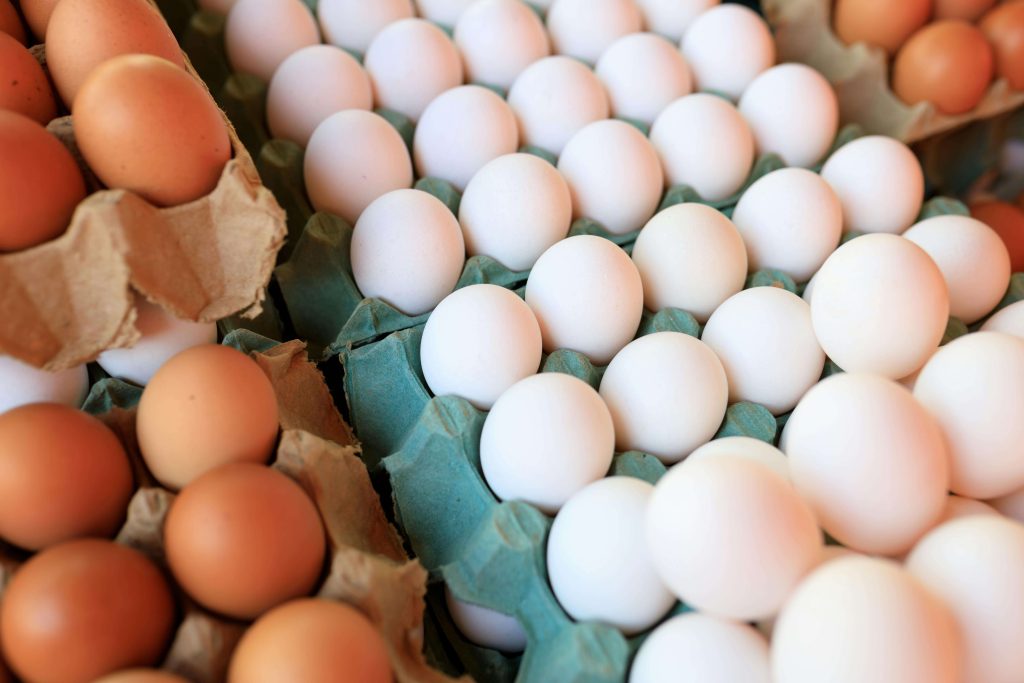
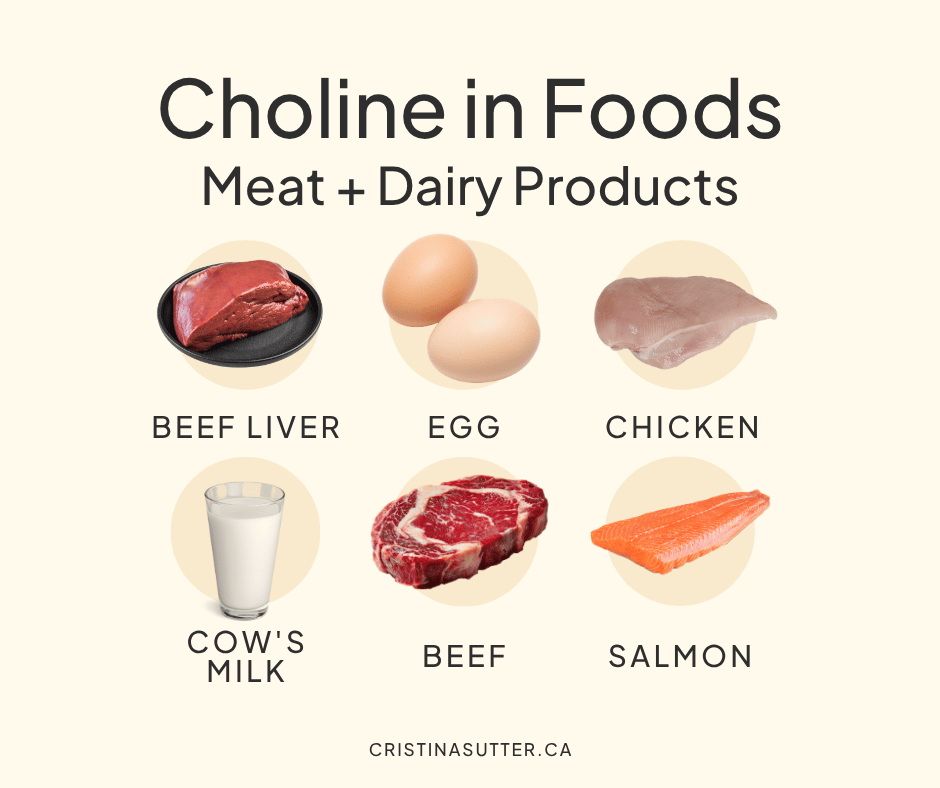
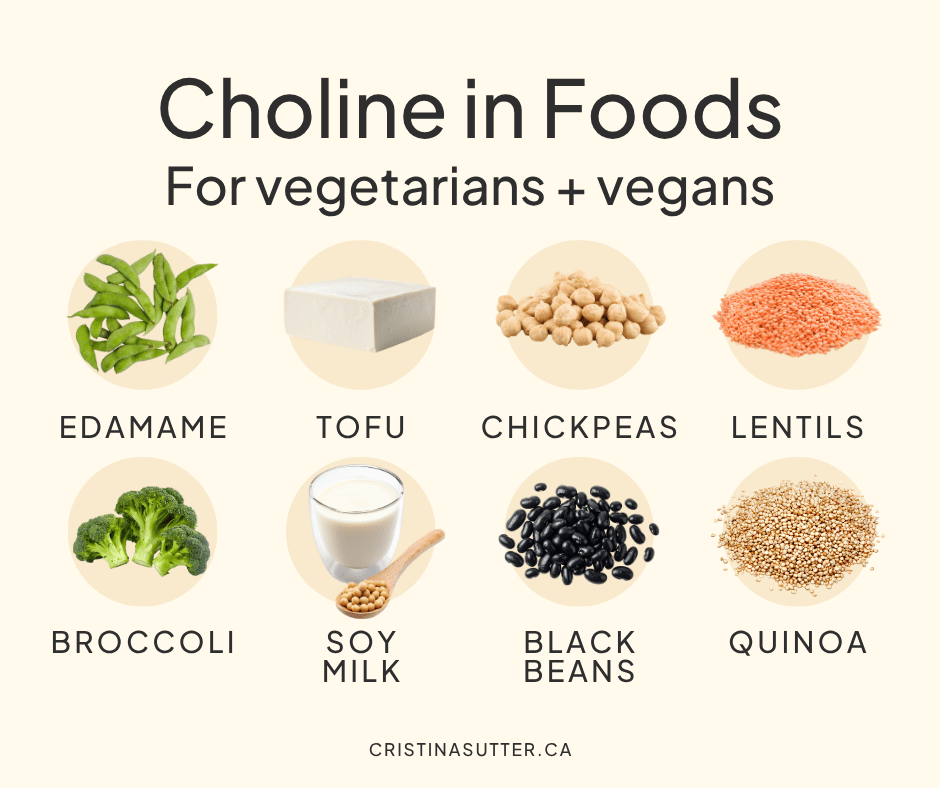
The choline content of foods is not typically reported in nutrient databases and therefore you may not get an accurate assessment about how much choline you consume when tracking your nutrition. This nutrient is thought to be widespread in foods, especially in liver, eggs, milk, meat and poultry; good news if you consume a mixed, omnivore diet. There is some speculation that vegetarians and vegans may be at risk of low choline intakes. Luckily, choline is also found in tofu, edamame, chickpeas, lentils, Brussel sprouts, broccoli, soy milk and black beans (see below).
How Much Choline Do You Need Daily?
The daily requirement for choline is 425 – 550 mg; this may be a challenge for some to consume on a regular basis, especially if you’re not eating a lot of eggs or liver. It is estimated that adult Canadians are consuming approximately 300 mg of choline daily, which is less than what is recommended.
Unlike many other “essential” nutrients we can make choline ourselves (through the complex phosphatidylethanolamine N-methyltransferase “PEMT” pathway, for those who want to dig deep in this topic). Nonetheless, experts claim that we cannot make enough choline ourselves hence the recommendation to add choline as an essential nutrient and try to get it from our diet.
BTW, at your next “trivia” contest you will be correct to say that choline, Vitamin D and Vitamin K are three essential nutrients that we can produce ourselves!
What Happens If You Don’t Get Enough? Can You Get Too Much Choline?
Inadequate intake of choline can lead to fat build-up in the liver, referred to as “fatty liver”, with eventual liver damage. And too much dietary choline can result in toxic symptoms, such as: fishy body odour, vomiting, excess salivation (saliva), sweating, diarrhea and low blood pressure. It is recommended not to exceed 3500 mg a day with choline consumption.
Choline and Athletic Performance
Some questions remain regarding choline and its role in athletic performance. There is speculation that choline may help increase fat burning and VO2 max (aerobic capacity), but the limited research in this area has explored a combination of carnitine, caffeine and choline in rats rather than choline alone with humans. Another potential benefit of choline is the possibility of helping to repair damaged muscle cells from strenuous exercise since choline is required for the integrity of cell membranes (including muscle fibre membranes) – more research is needed on this topic. At present, supplemental choline does not appear to enhance athletic performance, but stay tuned for future exploration with choline.
If you’re considering adding other supplements to your routine, it’s worth knowing what’s actually in them. Our post on lead in protein powders is a good reminder to always vet your supplements carefully.
For endurance athletes, micronutrient intake matters as much as macros. If you’re training for a race, our complete nutrition guide for marathon training covers everything you need to fuel performance.
Choline plays a central role in many physiological processes that impact our health on several levels. Continued research on this “new” essential micronutrient will help to provide greater insight to optimize health and athletic performances.
If you’re focused on building strength, check out our post on 9 muscle growth tips every active woman should know.“
It’s important to consume a variety of foods to try to meet our dietary requirements for choline. Those who eat eggs infrequently may be challenged to consume enough dietary choline. Supplementation may be a good idea if you rarely eat the choline-rich foods described in the table below. You may find choline in a multivitamin supplement. It is most likely found in a B-Complex Vitamin (but check the supplement label). Choline is a hot topic in the nutrition world, and we are slowly learning more evidence-based information from research on this essential nutrient.
Daily Choline Requirements (Adequate Intakes – AI)
Adult Women | 425 mg |
Pregnancy | 480 mg |
Adult Men | 550 mg |
Daily Maximum | 3500 mg |
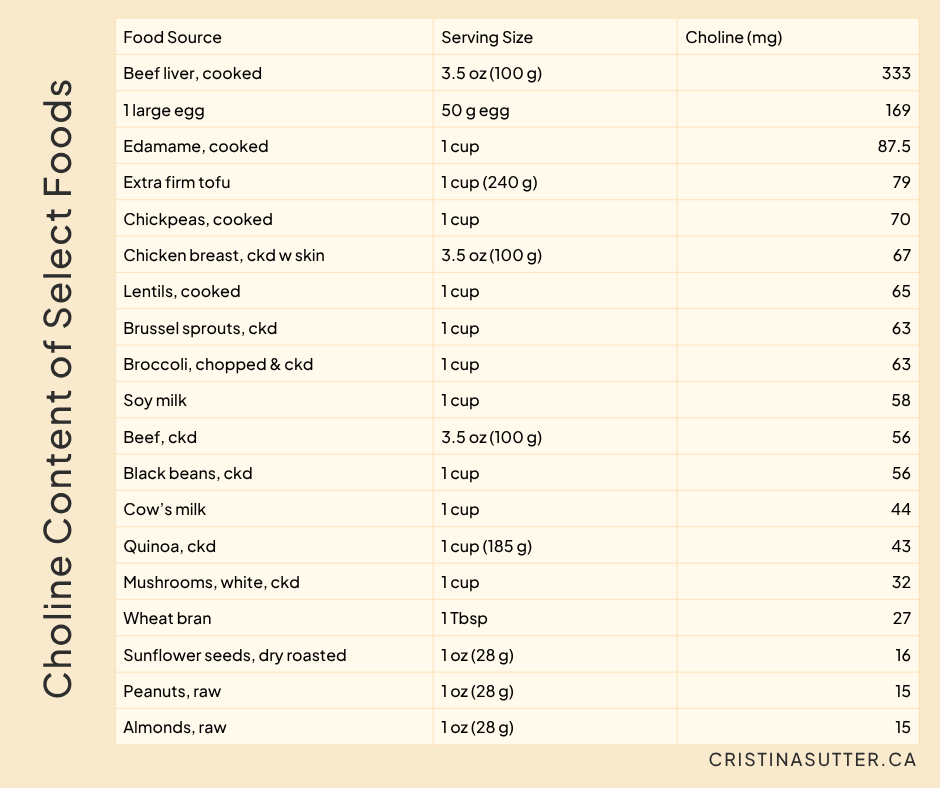
Choline Content of Select Foods
| Food Source | Serving Size | Choline (mg) |
| Beef liver, cooked | 3.5 oz (100 g) | 333 |
| 1 large egg | 50 g egg | 169 |
| Edamame, cooked | 1 cup | 87.5 |
| Extra firm tofu | 1 cup (240 g) | 79 |
| Chickpeas, cooked | 1 cup | 70 |
| Chicken breast, ckd w skin | 3.5 oz (100 g) | 67 |
| Lentils, cooked | 1 cup | 65 |
| Brussel sprouts, ckd | 1 cup | 63 |
| Broccoli, chopped & ckd | 1 cup | 63 |
| Soy milk | 1 cup | 58 |
| Beef, ckd | 3.5 oz (100 g) | 56 |
| Black beans, ckd | 1 cup | 56 |
| Cow’s milk | 1 cup | 44 |
| Quinoa, ckd | 1 cup (185 g) | 43 |
| Mushrooms, white, ckd | 1 cup | 32 |
| Wheat bran | 1 Tbsp | 27 |
| Sunflower seeds, dry roasted | 1 oz (28 g) | 16 |
| Peanuts, raw | 1 oz (28 g) | 15 |
| Almonds, raw | 1 oz (28 g) | 15 |
References:
- Goldman, David and Matthew Nagra. Choline adequacy and health outcomes in vegetarian and vegan diets. Acad Nutr Diet 2025; 2.
- Zeisel, Steven and Kerry-Ann da Costa. Choline: as essential nutrient for public health. Nutr Rev 2009; 67(11): 615-623.
- Burns, Brianne, Jitendra Belani, Hailey Wittorf, Eugen Brailoiu and Gabriela Brailoiu. Choline – an essential nutrition with health benefits and a signaling molecule. Int J Mol Sci 2025; 26(15): 7159.
- Sachan DS, and N Hongu. Increases in VO2max and metabolic markers of oxidation by caffeine, carnitine, and choline supplementation in rats. Nutr Biochem 2000; 11(10):521-526.
Written by Kelly Anne Erdman RD, MSc, OLY